
Erotic Paleolithic Art: Decoding Sexual Imagery, Fertility Symbols, and Cave Drawings in Ancient History
When exploring prehistoric art, our minds often jump straight to galloping herds of woolly mammoths, magnificent bulls, and mysterious red hand stencils painted across deep limestone walls. However, hidden deep within Upper Paleolithic rock shelters and subterranean caverns lies a fascinating, highly specialized artistic tradition: prehistoric sexual iconography and erotic cave art.
Spanning thousands of years, these representations of human anatomy, sexuality, and fertility offer profound insights into the social structures, spiritual worldviews, and survival mechanisms of Ice Age hunter-gatherers. This expanded, SEO-optimized guide examines key sites, recurring motifs, academic theories, and the authentic archaeological sources behind these extraordinary ancient findings.
Introduction: The Scope of Prehistoric Sexual Art
Sexual imagery in the Paleolithic era is not limited to a single region or time period. Dating primarily from the Aurignacian to the Magdalenian periods (roughly 38,000 to 11,000 BCE), these artworks are scattered across Western Europe, particularly concentrated in France, Spain, and Germany[cite: 1, 2].
Unlike modern erotic media, which serves diverse entertainment or educational purposes, prehistoric sexual imagery was deeply functional for ancient societies. It was intimately intertwined with survival, seasonal rituals, community identity, and early human cosmologies[cite: 1, 2].
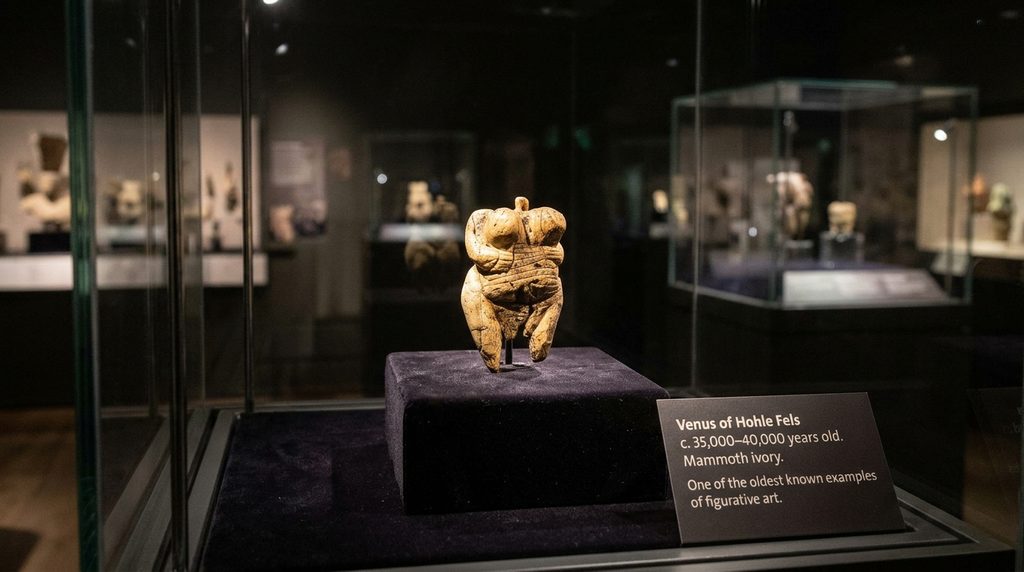
Venus of Hohle Fels mammoth ivory statuette showing exaggerated sexual anatomy
Major Archaeological Sites and Discoveries
Several key sites have shaped our modern understanding of Paleolithic sexuality and fertility art:
Abri Castanet (France)
Located in the Vézère Valley of France, Abri Castanet contains some of the oldest confirmed vulvar engravings in the world. Dated to approximately 37,000 years ago, these abstract triangular and oval shapes were chiseled directly into the limestone blocks of a collapsed rock shelter ceiling.
Chauvet Cave (France)
Famous for its breathtaking animal paintings, Chauvet Cave (approx. 32,000 BP) also houses significant anthropomorphic and sexual imagery. A notable feature includes a rock pendant depicting the lower torso of a female figure juxtaposed next to a powerful rhinoceros, symbolizing a profound ideological link between human reproduction and the animal kingdom.
Hohle Fels Cave (Germany)
While technically portable art rather than a cave wall drawing, the Venus of Hohle Fels (discovered in 2008 and dated to roughly 40,000 years ago) is a cornerstone of Upper Paleolithic fertility studies. Carved from mammoth ivory, it dramatically exaggerates sexual characteristics—such as breasts, hips, and the vulva—while omitting facial features entirely.
La Chaire à Calvin (France)
Situated in the Charente department, this rock shelter features detailed low-relief sculptures of female forms and sexual anatomy. Because these carvings were exposed to daylight rather than hidden in dark subterranean chambers, archaeologists believe they served communal, public ritual functions.
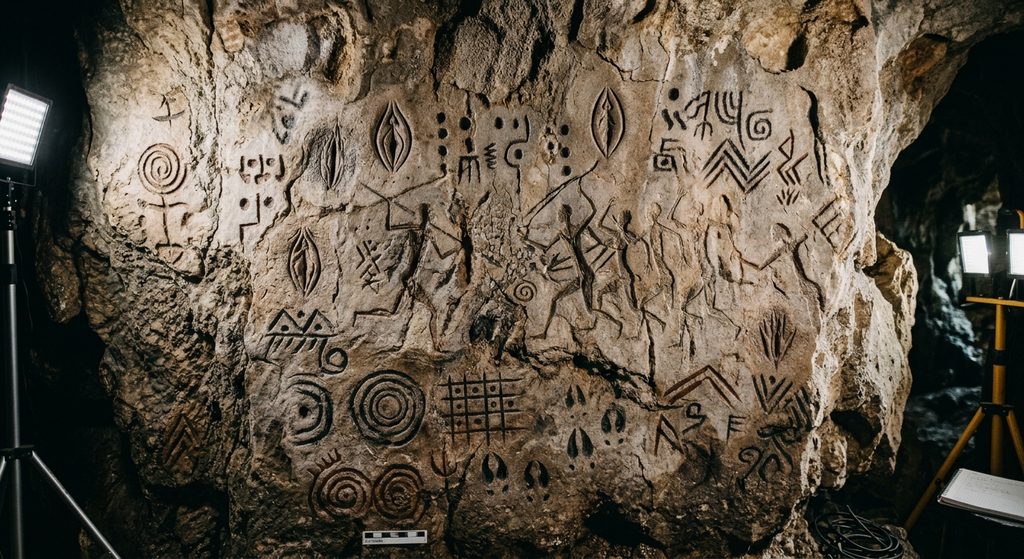
Core Motifs in Ice Age Erotic Art
Preolithic artists utilized a distinct visual vocabulary when expressing human sexuality:
- Vulvar Engravings: Triangular, oval, or horseshoe-shaped depressions etched into rock faces, representing female genitalia and birth.
- Phallic Representations: Detached phalluses sculpted from siltstone, antler, or bone, as well as stylized line sketches on cave walls.
- Steatopygous and Exaggerated Figures: Statuettes and wall carvings featuring enlarged reproductive organs, emphasizing fertility and health during periods of environmental stress.
- Therianthropic Combinations: Human figures possessing animal attributes, occasionally engaging in ritual or fertility dances alongside game animals.
Academic Theories: Why Did Early Humans Create Sexual Cave Art?
Archaeologists and anthropologists have proposed several primary frameworks to explain the prevalence of this imagery:
- Demographic Survival & Fertility Cults: During the harsh glacial maxima of the Ice Age, infant mortality was high and populations were fragile. Art emphasizing fertility may have functioned as a sympathetic magic ritual to encourage population growth and successful childbearing.
- Shamanic Rites of Passage: Deep, acoustically resonant cave chambers were frequently used for initiation ceremonies and altered-state rituals. Sexual symbols often marked transition zones where adolescents entered adulthood or where shamans communicated with spirit worlds.
- Social Territorial Markers: Abstract vulvar and phallic symbols likely acted as visual shorthand for tribal identity, defining territorial boundaries or shared cultural lineages among scattered nomadic bands.
Frequently Asked Questions (FAQ)
What is the oldest known sexual cave art?
The engraved rock shelters at Abri Castanet in France contain vulvar symbols dating back roughly 37,000 years, making them among the oldest documented examples of human sexual representation.
How were these cave drawings created?
Artists utilized natural earth pigments such as red ochre (hydrated iron oxide) and charcoal, applying them with fingers, pads of animal fur, or blowing them through hollow bird-bone tubes. They also used flint tools to engrave deep lines into limestone.
Are these drawings common compared to animal art?
No. Animal representations comprise the vast majority (roughly 80–90%) of Paleolithic cave art. Human anatomical and sexual symbols are much rarer, making their discovery critical for understanding human social behavior.
Sources and Academic References
The information compiled in this article is derived from peer-reviewed archaeological research, field reports, and anthropological studies, including:
- White, Randall. The Women of Celp: Abri Castanet and the Earliest Graphic Arts. (Research publications on Aurignacian rock shelters in the Vézère Valley).
- Conard, Nicholas J. A female figurine from the Hohle Fels Cave and the emergence of symbolic art in the Swabian Jura. (Nature Journal, regarding 40,000-year-old ivory figurines).
- Clottes, Jean. Cave Art: The Cave of Chauvet-Pont-d’Arc. (Comprehensive analysis of Paleolithic iconography, ritual context, and wall engravings).
- Leroi-Gourhan, André. Treasures of Prehistoric Art. (Foundational structuralist analysis of sexual symbolism and spatial organization in caves).
See More At WWW.FREENSFWTUBE.COM